

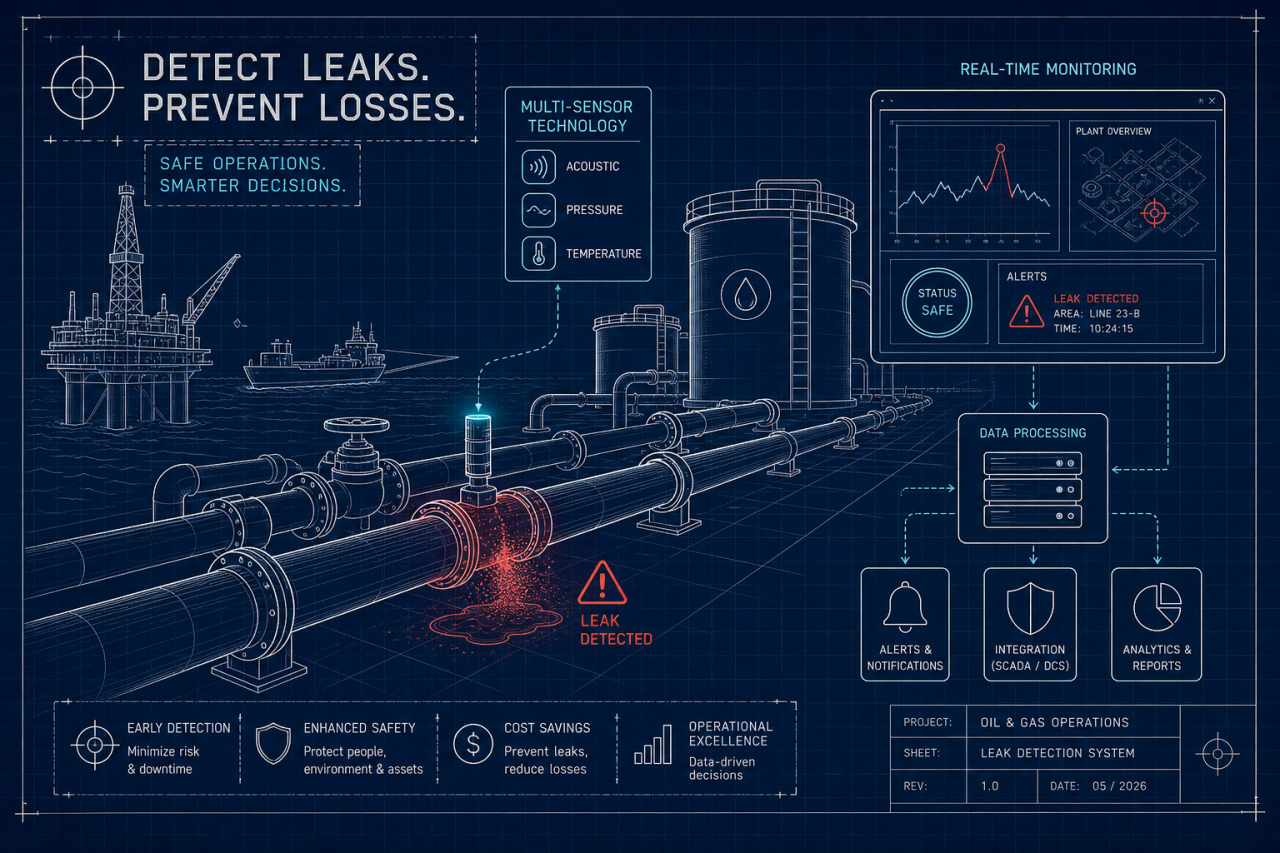
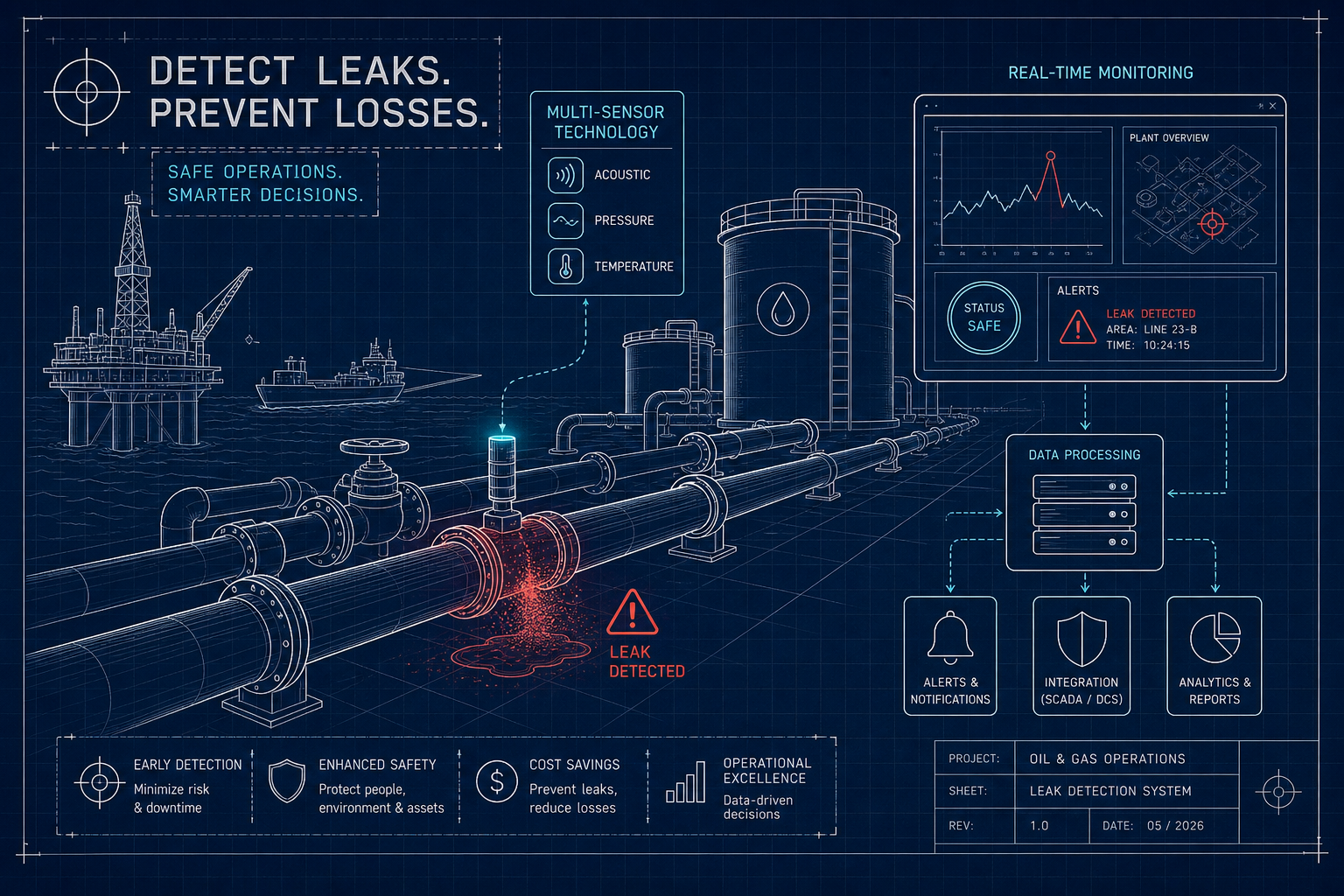
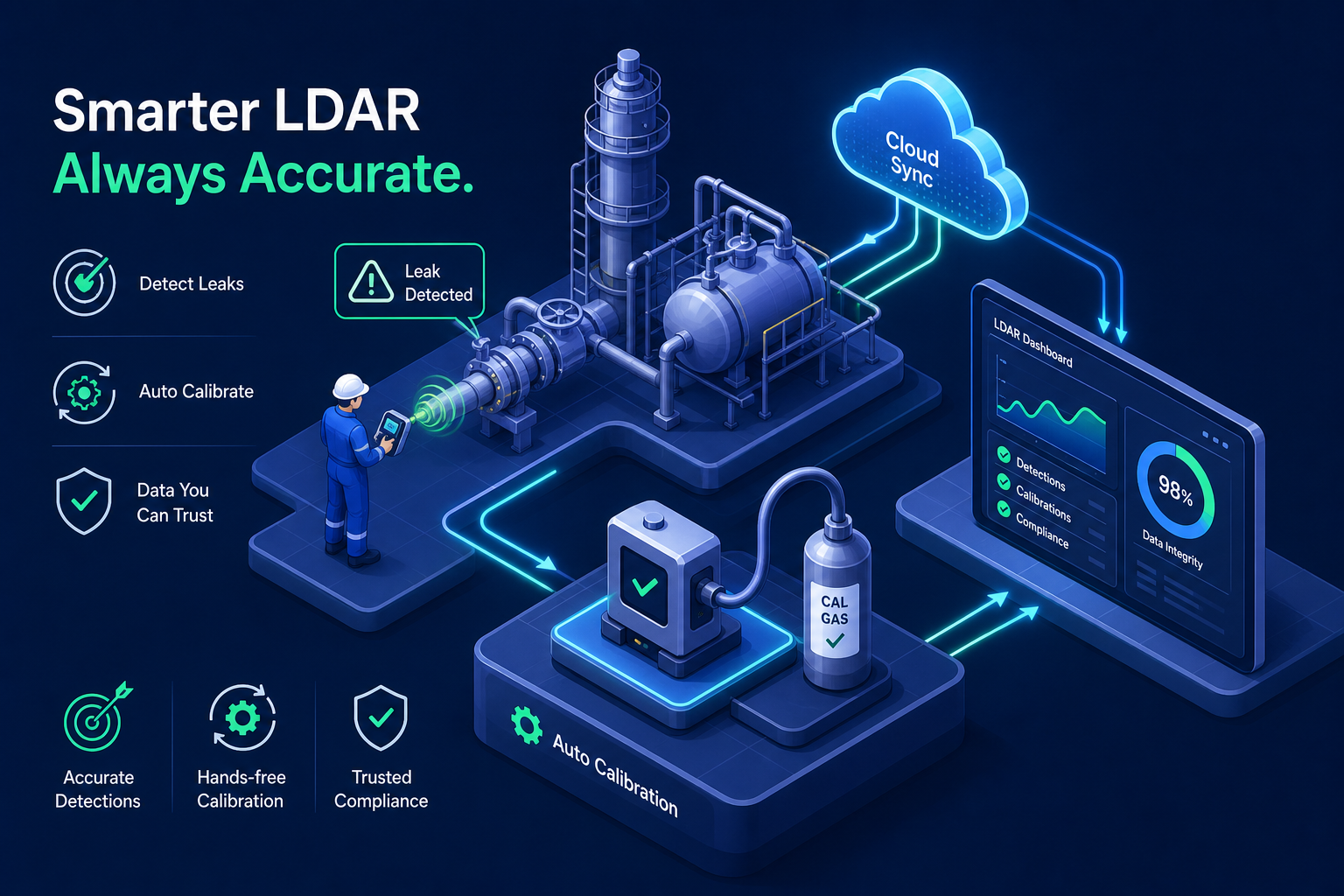
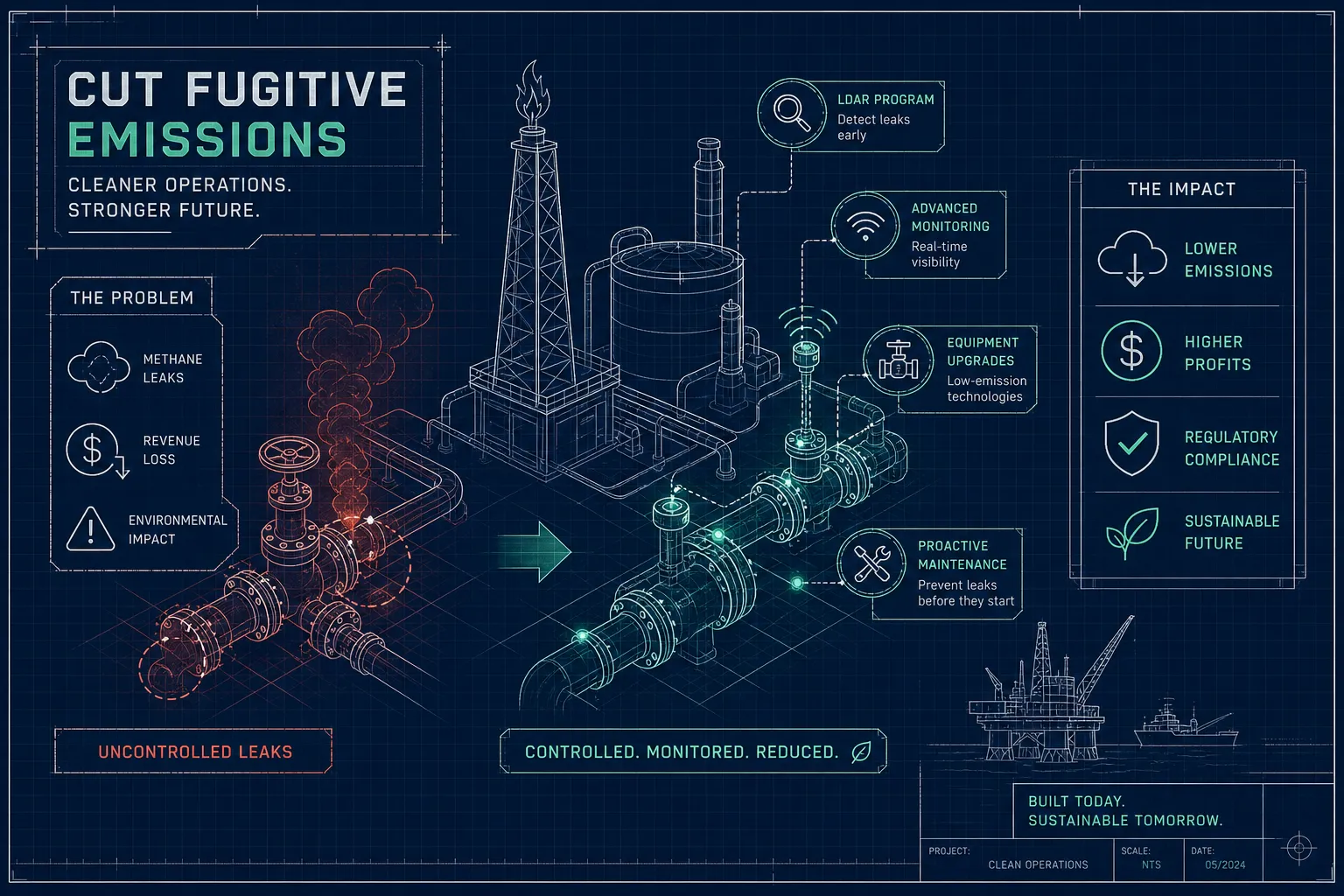
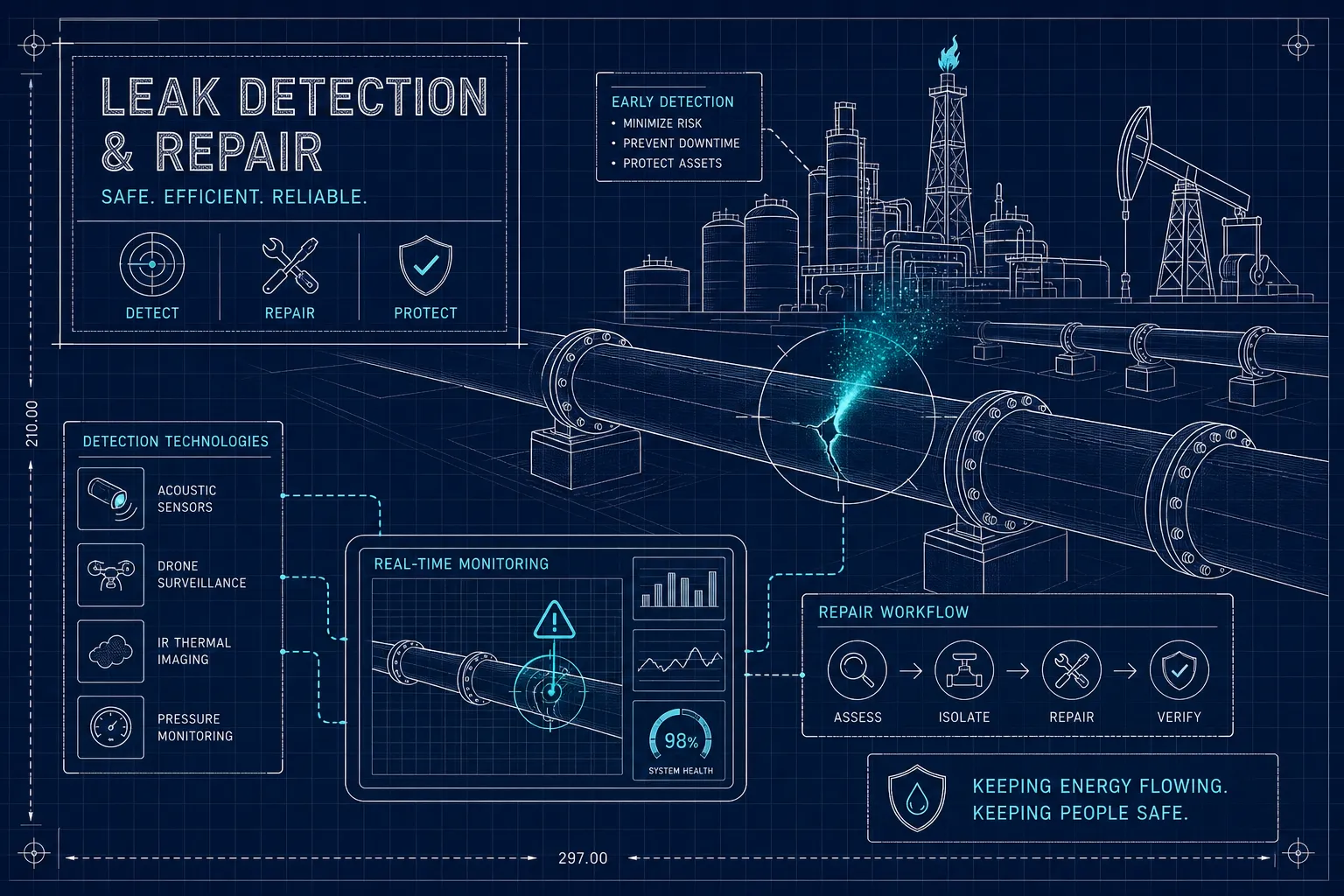
Oil and gas leak detection has shifted from a compliance checkbox to a boardroom priority. Methane regulations are no longer a future concern, they are active, with hard deadlines running through 2026 and into 2027. ESG scorecards now directly influence access to project financing, as major institutional lenders have begun conditioning capital on documented emissions performance. And regulators, from the EPA to state agencies in Colorado and New Mexico, are auditing programs with greater technical scrutiny than at any previous point in the industry’s history. For operators, the question is no longer whether to invest in detection, but which system to deploy, on which assets, and at what cost.
This article compares the three primary detection technologies, matches them to specific asset classes, sets realistic budget expectations, and maps the regulatory checkpoints your program must clear in 2026. You will also find an illustrative example drawn from Osten Laboratory Limited’s consulting work with a midstream operator who needed to turn ESG commitments into auditable data. The goal is a practical decision framework, not a technology catalog.
Why ESG pressure is making oil and gas leak detection a boardroom issue
Methane carries approximately 80 times the warming potential of CO2 over a 20-year window, according to IPCC AR6 guidance. That single figure explains why regulators, investors, and ESG rating agencies have converged on it as the defining emissions metric for oil and gas operators. The EPA NSPS OOOOb framework reflects this directly: the June 1, 2026 deadline covers continuous monitoring of net heating value at flares and enclosed combustion devices, while the January 22, 2027 deadline extends to equipment leaks, storage vessel controls, process controllers, and inspections on closed-vent systems. Annual reports are due approximately May 2027.
State-level standards go further than the federal floor. Colorado mandates semiannual LDAR inspections with a 60% methane reduction target below 2005 levels by 2030. New Mexico requires operators to certify 98% waste gas capture by December 31, 2026, with monthly leak checks and repair within 15 days of detection. For multi-state operators, planning must account for the strictest applicable standard at each site.
The financial dimension compounds the regulatory one. Investors and lenders increasingly tie capital access to measurable, documented emissions performance. ESG frameworks require quantified emission reductions, not estimates. That distinction is pushing operators away from periodic manual inspections and toward continuous gas leak monitoring programs that generate audit-grade data. Your detection program is now a financial instrument as much as a safety protocol, treating it as less creates real exposure.
Oil and gas leak detection technologies: what they detect and where they fall short
Infrared detection: high sensitivity, very low false-alarm rates
Infrared sensors measure the absorption of specific wavelengths of light by target gas molecules. Hydrocarbons, methane, and other vapors absorb IR light at characteristic wavelengths, and that absorption is proportional to concentration. Detection thresholds reach ppm-m levels in open-path configurations, and the technology remains effective in oxygen-deficient environments common on offshore platforms and enclosed process units.
The key operational advantage is gas selectivity. IR sensors identify the specific compound rather than triggering on environmental factors like humidity, oxygen fluctuation, or competing chemical exposure, which keeps false-alarm rates very low relative to general-purpose detectors. The practical trade-off is upfront cost. Fixed IR sensors run from $1,250 to $3,000 per unit, with station-wide installations ranging from $50,000 to over $200,000 depending on sensor count, hazardous area ratings, and integration requirements. Their 10-year lifespan makes the per-year cost competitive against alternatives that require more frequent replacement. IR is best deployed where continuous hydrocarbon monitoring is non-negotiable and downtime from false alarms would carry operational or safety consequences.
Ultrasonic and acoustic detection: different tools for different problems
Ultrasonic detectors capture high-frequency sound waves generated when pressurized gas escapes through a leak. They are fast, portable, and non-contact, which makes them the right tool for valve, flange, and pressurized line inspections during routine maintenance rounds. The limitation is environmental sensitivity: wind, mechanical vibration, and background industrial noise all elevate false-alarm rates. Skilled operators can manage this, but ultrasonic tools are not suited for unattended continuous monitoring.
Acoustic detection systems use microphones, accelerometers, or vibration sensors to identify pressure and acoustic signatures from pipeline leaks. With adaptive methods like CFAR (Constant False Alarm Rate) processing, false-alarm rates in controlled test scenarios drop to approximately 1.2% overall, with localization accuracy reaching 98% for leaks above 10 mm in diameter. Acoustic signals propagate effectively through buried pipe walls, making this technology the strongest option for long-distance transmission lines and buried pipeline segments where stationary point sensors provide no coverage.
Matching oil and gas leak detection methods to asset type and risk profile
Pipelines: acoustic monitoring covers what point sensors cannot
Long-distance pipelines require detection that travels with the leak signal along the pipe, not sensors placed at fixed intervals. Acoustic systems validated on real pipeline networks detect leaks in real time with low computational overhead. Fiber-optic distributed acoustic sensing extends coverage to approximately 130 km per sensor with localization accuracy within a few meters, based on published vendor technical data. For buried midstream transmission assets, acoustic or fiber-optic monitoring is the practical standard. Wireless sensor networks offer deployment flexibility in remote or difficult terrain, with node-to-node communication ranges of 350 to 400 meters and battery lives exceeding 10 years.
Fixed IR sensors remain useful at compressor stations and above-ground pipeline sections where continuous hydrocarbon monitoring matters, particularly near population centers or environmentally sensitive areas. The two technologies complement each other rather than compete, pipeline integrity monitoring typically requires both.
Tank farms and production facilities: layered approaches for compliance and operations
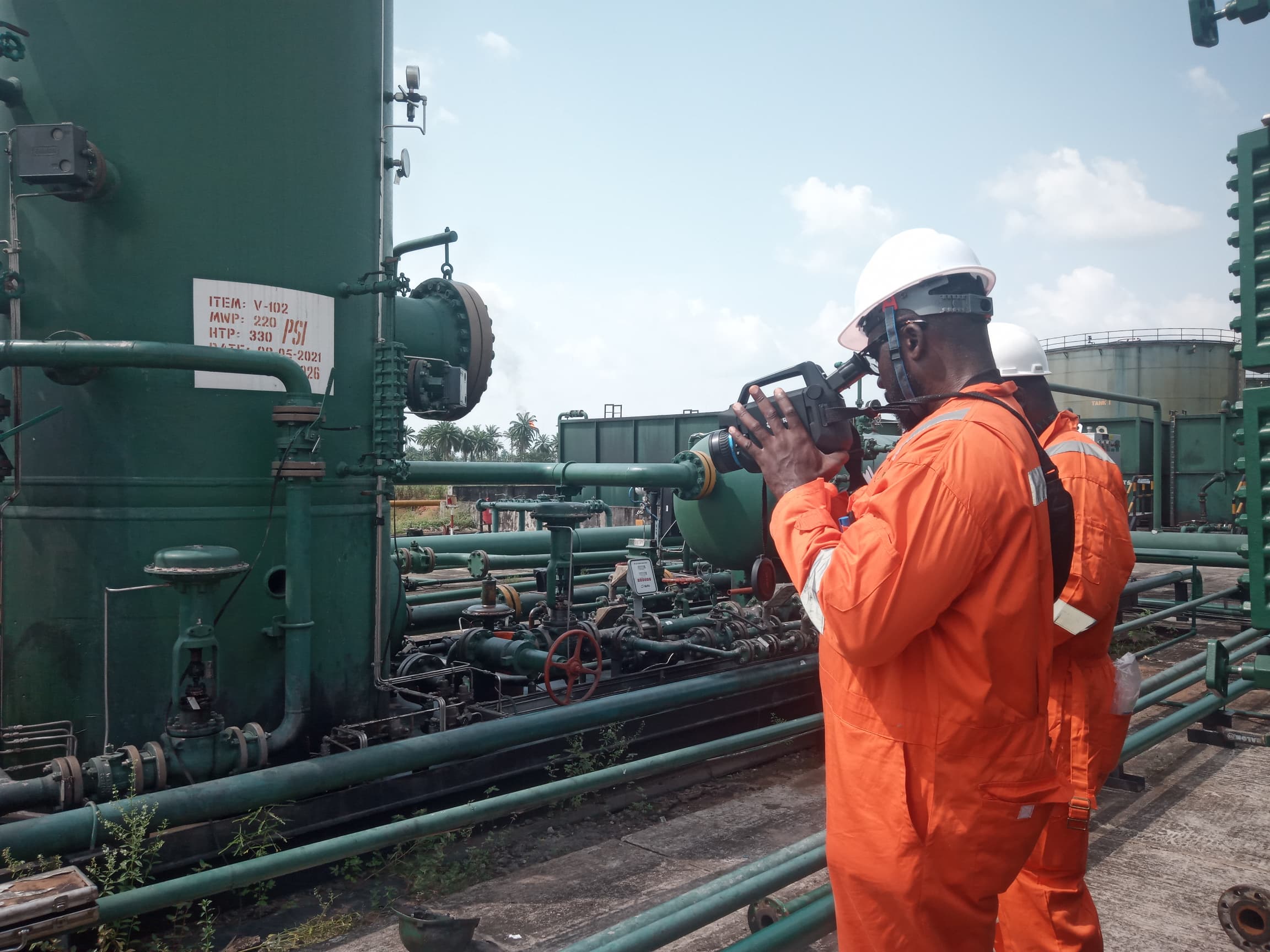
Tank farms require a layered strategy. Optical gas imaging (OGI), a form of infrared thermal imaging, is recognized under EPA NSPS OOOOb as an Alternative Work Practice alongside Method 21 for compliance-grade LDAR inspections on storage vessels, covers, and closed-vent systems. OGI detects leaks as low as 0.8 grams per hour and provides real-time visualization of gas plumes, allowing inspectors to localize leaks to specific components faster than point-by-point Method 21 scanning. For very small emissions, Method 21 handheld probes remain more sensitive, which is why both methods appear in robust compliance programs.
Fixed-point IR sensors provide around-the-clock monitoring at high-risk zones such as emergency vents and loading bays. Ultrasonic handheld tools work well for quarterly spot checks on flanges and valve packing. The principle is consistent: use the regulatory-approved detection method where compliance documentation is required, and supplement with continuous systems for operational awareness between inspection cycles.
Processing plants: integration is the actual challenge
Processing plants combine all three asset types, pressurized lines, storage, and combustion equipment, in a single facility. A single-technology approach leaves gaps. The practical model pairs a continuous fixed-sensor IR network at critical process points with acoustic monitoring on inter-unit pipelines and periodic OGI surveys for compliance reporting.
The bottleneck is rarely the sensor hardware. It is the integration layer that connects detection alerts to a central monitoring platform and reduces the lag between detection and repair. Industry experience consistently shows that detection-to-repair lag is a common source of regulatory non-compliance, one that better data integration directly addresses.
What leak detection actually costs: a realistic budget framework
Leak detection costs break into three layers: equipment acquisition (CAPEX), installation and commissioning (typically 30 to 50% of equipment cost for fixed systems), and ongoing maintenance, calibration, and data management (OPEX). A portable ultrasonic program carries low CAPEX but significant labor OPEX when deployed at scale. A fixed continuous monitoring network inverts that ratio. Neither structure is inherently wrong, the right choice depends on asset density, monitoring frequency requirements, and how much of the compliance burden is carried by continuous versus periodic inspection.
The global oil and gas pipeline leak detection market is estimated at USD 3.6 billion in 2026. Operators who have deployed automated sensor networks with real-time analytics have reported up to 40% fewer equipment failures and annual savings reaching $10 million in some operations, according to industry analyses. For research on low-cost fixed sensors and deployments, see published work on low-cost fixed sensor deployments for leak detection. A well-scoped wet seal degassing recovery system, for example, carries approximately $70,000 in CAPEX with near-zero ongoing OPEX and delivers up to 95% emission reduction, illustrating how targeted hardware investments can outperform broad sensor deployments on a return-on-investment basis.
Two consistent errors appear in detection budget planning. Overspending happens most often in sensor density, deploying fixed IR sensors across low-risk areas where periodic ultrasonic inspections would suffice. Underspending happens at integration: purchasing detection hardware without investing in the data infrastructure needed to act on alerts. A structured risk assessment that maps asset criticality against detection method before hardware is specified prevents both errors, and this is typically where a consulting audit delivers its clearest return.
How a detection audit turned ESG commitments into verified reductions
Note: The following is an illustrative example based on the type of work Osten Laboratory Limited conducts. Specific details are representative of typical engagement outcomes rather than a single documented case study.
A midstream operator with a pipeline network and multiple compressor stations had committed to methane reduction targets as part of a financing covenant. Their existing program relied on annual contractor-led OGI surveys, a schedule that produced compliance documentation but left months-long gaps in operational awareness. Emissions events between surveys were invisible until downstream process effects revealed them. ESG disclosures filed under the financing agreement were based on estimated rather than measured emissions, a gap that ESG-focused investors increasingly flag as a material disclosure risk.
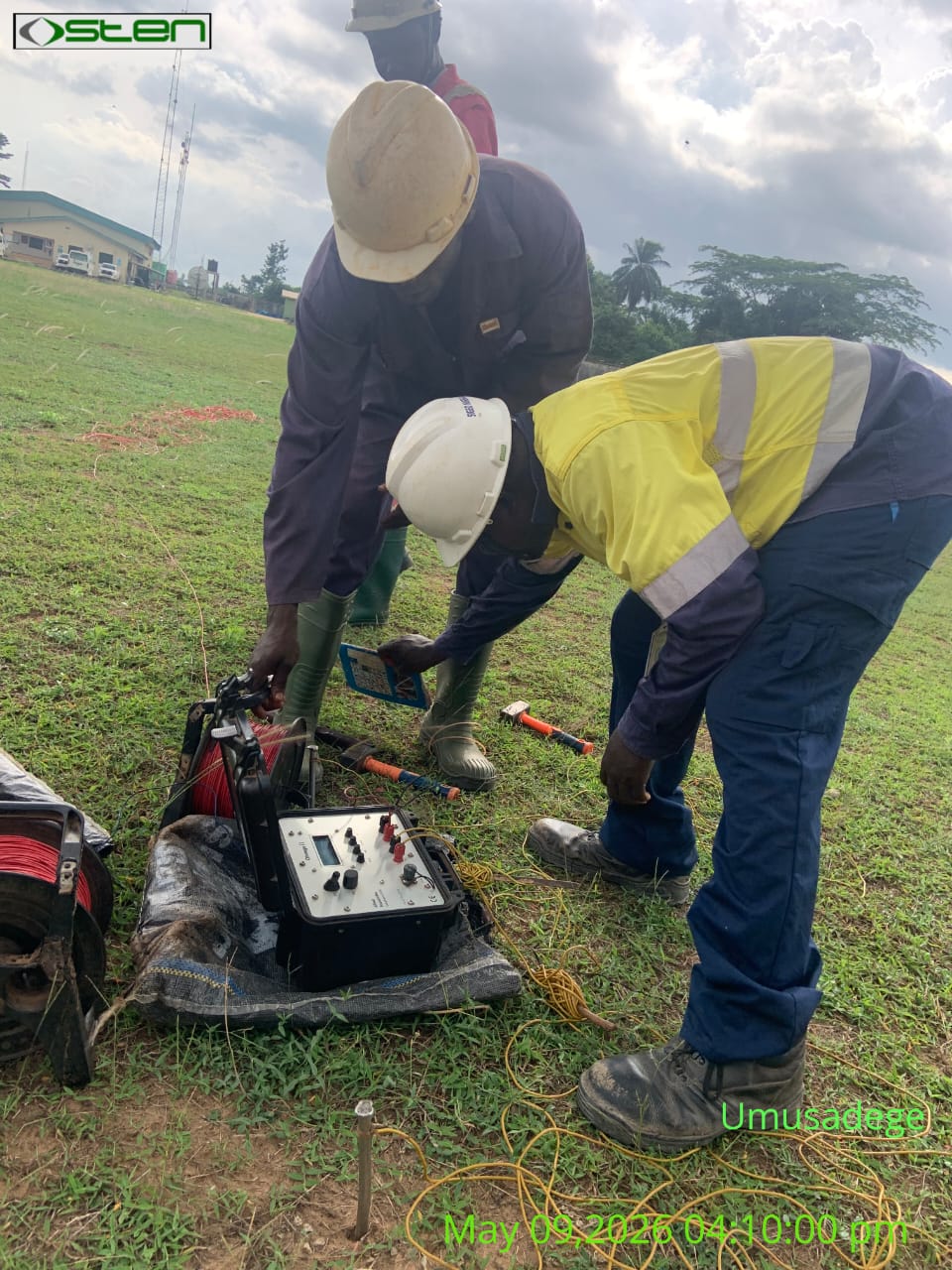
Osten Laboratory Limited was engaged to conduct a structured detection audit. The scope covered mapping asset types against detection gaps, identifying which pipeline segments and compressor stations carried the highest unmonitored risk, and recommending a technology mix and monitoring protocol aligned to both regulatory requirements and the operator’s ESG reporting obligations. The audit identified three compressor stations with no continuous monitoring in place. It also found that the existing OGI survey frequency met the regulatory minimum but was insufficient to support accurate ESG reporting.
Based on the audit findings, Osten Laboratory recommended fixed infrared continuous monitoring at the three high-risk stations, acoustic monitoring on two key pipeline segments, and a quarterly OGI protocol with data feeds into the operator’s ESG reporting platform. The protocol was structured to align with NSPS OOOOb documentation requirements, eliminating a separate compliance reporting workstream. Within one operating cycle, measured methane emissions replaced estimated figures in the ESG disclosure, and verified reductions replaced projections. By matching detection investment to risk-ranked assets, the operator achieved stronger data coverage without across-the-board capital expenditure.
Build your detection program around decisions, not just devices
When designing oil and gas leak detection programs, the technology choices follow a clear logic once the variables are mapped. Infrared for continuous facility monitoring where gas selectivity and uptime matter. Acoustic for pipeline integrity monitoring on buried and long-distance transmission segments. Ultrasonic for pressurized spot checks on valves, flanges, and equipment during routine maintenance rounds. OGI for compliance-grade LDAR inspections on storage vessels and closed-vent systems. No single technology covers everything, and the gap between technologies is typically where emissions events go undetected longest.
Budget for integration as well as hardware. With 2026 reporting obligations already in effect and New Mexico requiring certified performance data before December 31, 2026, the cost of a poorly structured program now includes direct compliance exposure alongside operational risk. The distinction between estimated and measured emissions is no longer academic, it affects covenant compliance, investor disclosures, and audit outcomes.
For operators who need to get this right the first time, a structured detection audit is the logical starting point. Osten Laboratory Limited provides LDAR program design, accredited environmental monitoring, ESG consulting, and calibration services across oil and gas, power, and manufacturing sectors, with offices in Port Harcourt, Lagos, and Warri. To develop a detection program that produces audit-grade data rather than just compliance checkmarks, contact Osten Laboratory Limited to begin with a detection audit that matches technology to assets before hardware commitments are made.
